Student ReviewThe Skillians logo×Adobe logoAdobe

From Zero Coding Knowledge to Adobe

Devansh Sharma's journey through The Skillians Academy — 10 months, 900+ LeetCode problems, 90+ mock interviews, and one ₹27.6 LPA offer that changed everything.

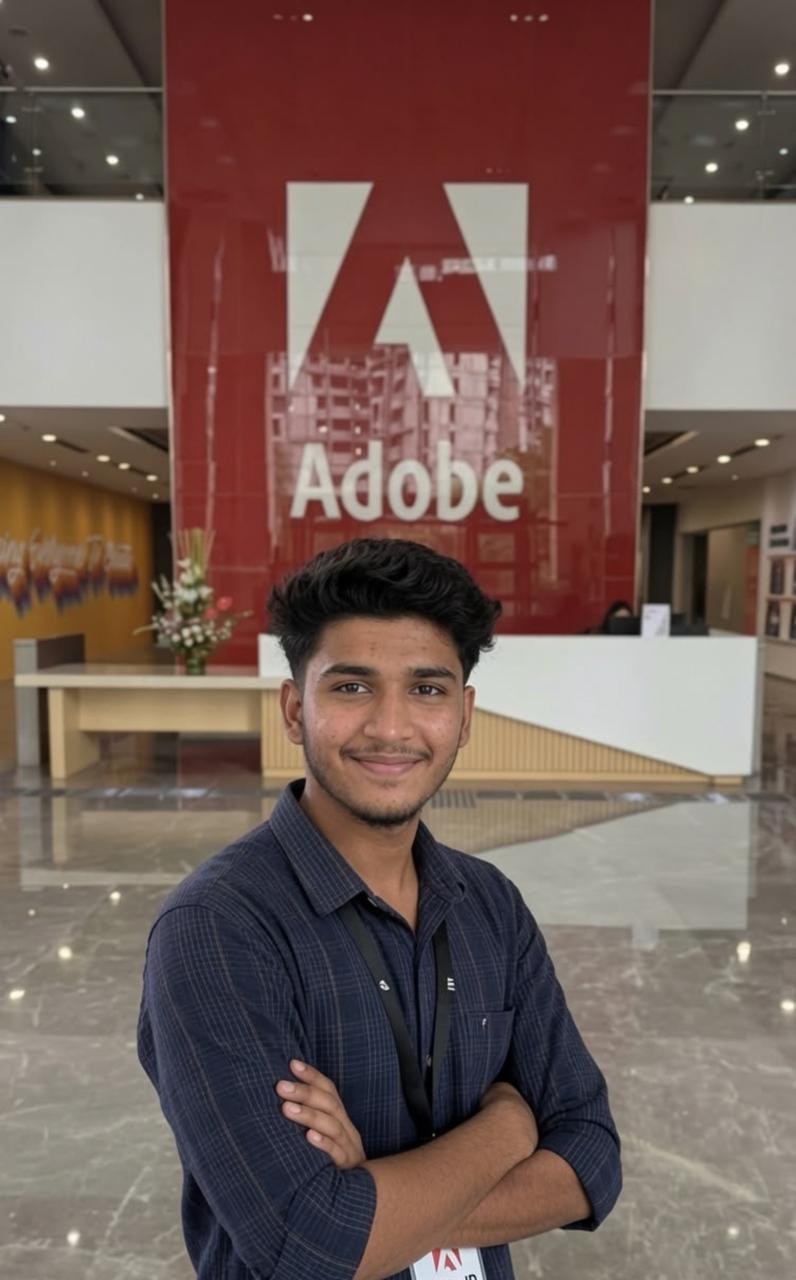
Devansh Sharma, The Skillians alumnus placed at Adobe
Devansh Sharma
Software Engineer · Adobe
Adobe
10-11 Months
Duration
900+
LeetCode Questions
90+
Mock Interviews
₹27.6 LPA
CTC Offered

Ten months ago, I didn't know what a variable was. Today, I work at Adobe.

If you had told me a year ago that this would be my story, I wouldn't have believed you. I came from a completely non-tech background. No computer science degree, no coding club in college, no head start of any kind. Just a decision — and a willingness to put in the work. This is that story.

01

Starting From Absolute Zero

I opened a code editor and it felt like a foreign language with no dictionary.

I still remember the first time I opened a code editor. It felt like staring at a foreign language with no dictionary in sight. Everyone around me seemed to already know something — loops, functions, data structures — words that meant nothing to me. It was intimidating, and honestly, a little embarrassing. But I had one thing going for me: I was determined to change my career, and I was willing to start from the very beginning without any ego about it. That's when I joined The Skillians Academy's Pay After Placement program in Full Stack Development.
02

Why Pay After Placement Mattered

Coming from a non-tech background, money was tight and doubt was heavy. Committing a large sum upfront to learn a skill I wasn't even sure I could master felt like a risk I couldn't take. The Pay After Placement model changed that equation entirely. It meant the program had as much skin in the game as I did — they only got paid if I got placed. That alignment gave me the confidence to commit fully, without the constant fear of "what if this doesn't work out."
03

Learning From the Basics — Literally

I didn't skip a single fundamental. HTML, CSS, JavaScript, the logic of programming itself — I built my foundation brick by brick. There were days it felt painfully slow, watching batchmates who had some prior exposure move faster than me. I had to remind myself often: everyone starts somewhere, and speed doesn't matter as much as depth. Slowly, the basics started clicking. Frontend, backend, databases, APIs, deployment — piece by piece, the picture came together. What once looked like an unreadable foreign language started to feel like a set of tools I could actually use.
04

900+ LeetCode Questions: The Grind Nobody Sees

900+ problems weren't about memorising solutions. They trained my brain to think like a problem solver.

This is the part people don't talk about enough — the sheer, unglamorous repetition it takes to get interview-ready. I solved over 900 LeetCode questions. Arrays, strings, trees, graphs, dynamic programming — I went topic by topic, pattern by pattern, mistake by mistake. Some days I solved five problems and felt unstoppable. Other days I stared at one problem for hours and got nowhere. I kept going anyway. There's no shortcut here. The pattern recognition, the speed, the calm you feel in a real interview when you spot a familiar structure in a new problem — that all comes from repetition.
05

90+ Mock Interviews: Where the Real Preparation Happened

If LeetCode built my problem-solving muscle, the 90+ mock interviews at The Skillians built my interview muscle — and those are two very different things. Knowing how to solve a problem alone at your desk is nothing like explaining your thought process out loud, under time pressure, while someone watches you think. My first few mock interviews were rough. I fumbled explanations, went silent when I got stuck, and second-guessed myself constantly. But every mock interview sharpened something. I learned how to think out loud without panicking. I learned how to structure my approach before jumping into code. I learned how to handle the moment when my first idea was wrong and I had to pivot in real time. By the time I sat for my actual interviews, none of it felt unfamiliar.
06

Practice, and Then Practice Again

If there's one word that defines these ten to eleven months, it's relentless. Not talent, not luck, not some natural gift for coding — just showing up every single day and doing the work, even when progress felt invisible. There were weeks I doubted myself. There were moments I wondered if someone from my background could really make it into a company like Adobe. But I kept showing up. I kept solving one more problem, taking one more mock interview, fixing one more mistake.
07

The Day It All Paid Off

The same person who didn't know what a variable was had an offer from Adobe.

After 10-11 months of consistent, focused effort, I got the offer from Adobe. I won't pretend it didn't feel surreal. The same person who once didn't know what a variable was had just been offered a role at one of the biggest tech companies in the world. But looking back, it wasn't surreal at all — it was the direct result of every single day I chose to keep going.
08

If You're Where I Was

If you're reading this from a non-tech background, wondering if it's even possible for you — it is. You don't need a computer science degree. You don't need to have started coding as a teenager. You don't need to be a genius. What you need is a clear structure to learn from, relentless practice, and the discipline to keep showing up on the hard days. If you are determined, it is absolutely possible. I'm proof of that. And if I could do it starting from zero, so can you.
The Skillians

Ready to start your own Adobe story?

Join The Skillians Pay After Placement program — structured learning, relentless mock interviews, and placement support aligned to your success.

Explore Programs